Run shared EV charging without adding manual admin
Apartment buildings can give residents access to EV charging without installing a charger in every parking bay. Shared chargers in suitable bays give residents a practical place to charge and give the committee a service it can manage.
ChargeStack puts those controls in one place. Your committee can manage access, pricing, payments, session records, and charger activity without relying on spreadsheets or chasing residents for payment.
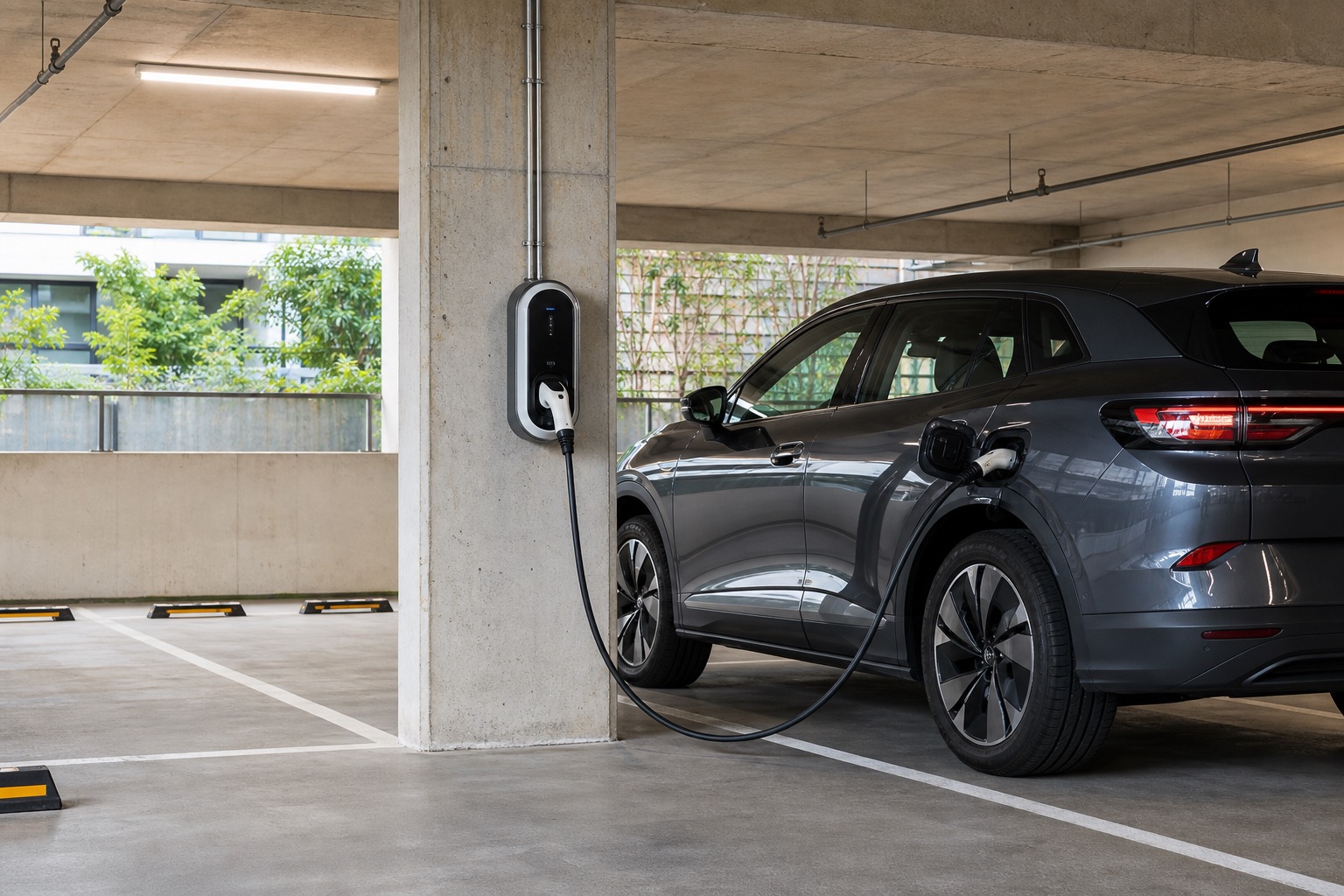
Install shared chargers where they make sense
For many apartment and strata buildings, one or two shared Level 2 chargers in a suitable part of the car park are enough to serve residents without requiring dedicated infrastructure in every bay.
The committee can see how often the chargers are used, whether residents follow the access rules, and how much electricity is consumed. When demand increases, add shared bays, allocated resident chargers, or visitor access based on actual use.
Use your preferred electrical contractor
Apartment EV charging does not have to start with a single specialist charging network provider. Strata committees, building managers, and owners corporations can work with their preferred electrical contractor to design and install hardware that suits the building.
That keeps the building in control of the installation approach, charger selection, location, budget, and future expansion path. It also gives installers a clear brief: connect the chargers, confirm the communications path, and hand over a charging service that can be operated from day one.
ChargeStack works alongside the installer by providing the back office that operates the chargers once they are live. The contractor handles the electrical installation. ChargeStack handles access, payments, session records, monitoring, and reporting.
Recover electricity costs without spreadsheets
Cost recovery is one of the first concerns in an apartment building. If the electricity comes from a shared supply, the committee needs a fair way to make sure charging costs are paid by the people using the service.
ChargeStack records charging sessions, collects payments through the platform, and gives managers visibility over usage and payment state. Residents use the charger, sessions are logged, and reports are available from the management portal.
That removes the need to manually calculate usage, collect payments from residents, or maintain separate spreadsheets. It also gives the committee clear records for owners and building managers.
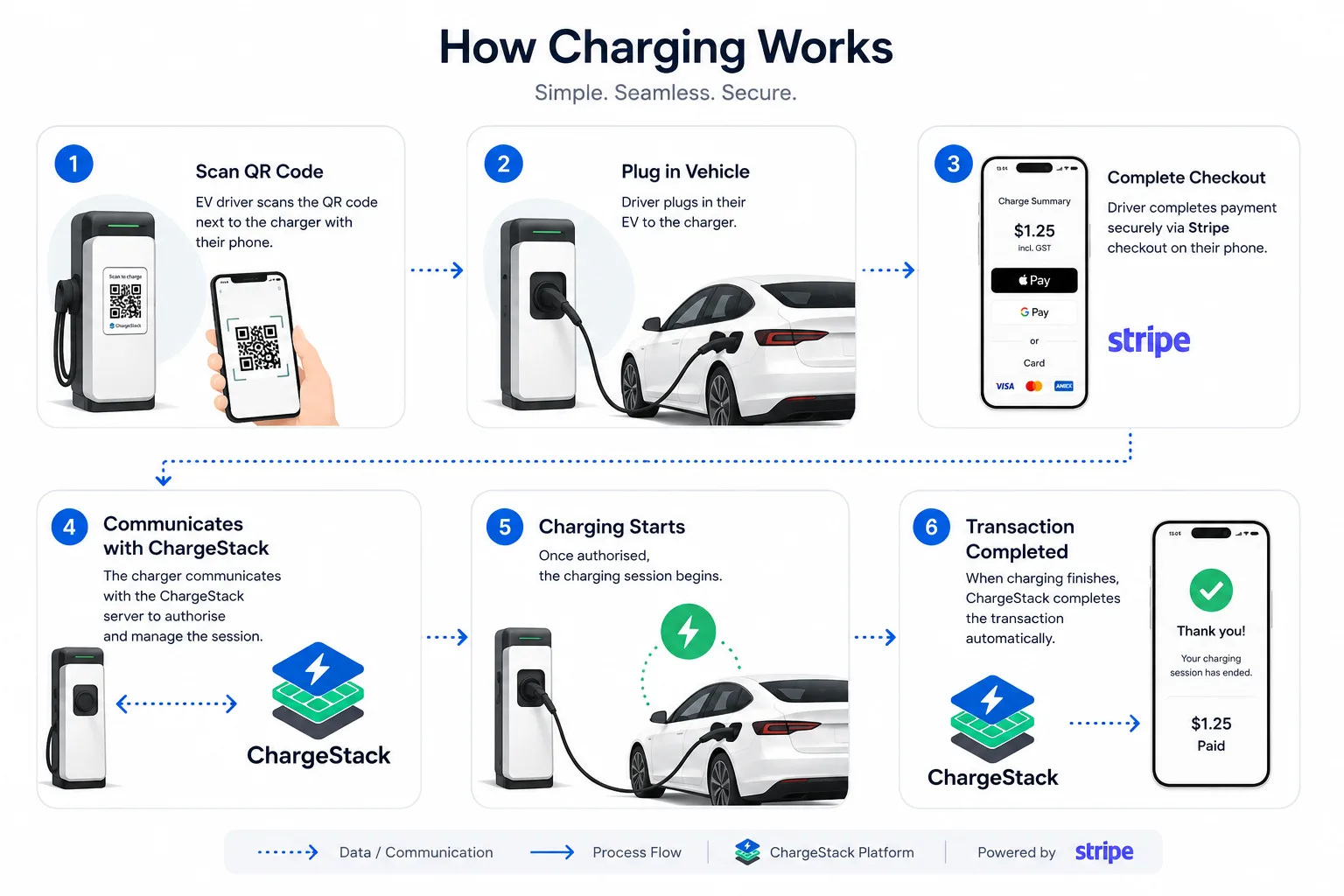
Manage charging from one back office
A charger in a shared car park is not only an electrical asset. It is also an operational service. Someone needs to know whether the charger is available, who can use it, what price applies, and whether sessions are being paid for correctly.
ChargeStack gives apartment and strata teams one back office for that work. Operators can see charger status, session history, user groups, pricing, payment state, and reporting in one place, while drivers use straightforward QR flows or managed access paths at the charger.
- Monitor charger availability and see when a charger needs attention.
- View charging sessions, electricity usage, and payment status.
- Manage resident, visitor, building manager, committee, or approved user access.
- Set pricing and review cost recovery through clear reports.
- Keep a clear operational record for the committee and building manager.
Avoid being locked into one charger manufacturer
Choosing charging hardware is a long-term decision, especially in a shared building. Your charging service should not lock the owners corporation into one charger brand or one installation model.
ChargeStack supports a wide range of OCPP-compatible chargers. In plain terms, OCPP is the common communications standard many commercial chargers use to connect with management software. This gives the building more flexibility when selecting hardware with its installer.
The building can start with the charger model that fits the site, budget, and electrical design, then keep room to add other compatible chargers as the car park changes over time.
Give residents a charging service they can use
Residents need a simple way to start charging and pay the correct amount. Building managers need clear records, and committees need confidence that shared electricity costs are recovered.
ChargeStack provides the software, payments, and management platform to run the service. Your chosen electrical contractor handles the installation. Together, they give your building a straightforward way to offer apartment EV charging without ongoing administrative overhead.
Check out our free use-case guide below